 AV ALL IN
A hotel sells atmosphere and events, and its AV system has to serve both: background music that guests barely notice, and a ballroom that runs a wedding tonight and a conference tomorrow morning. This guide covers both jobs, how each is sized, and what to prepare before you ask for a quotation.
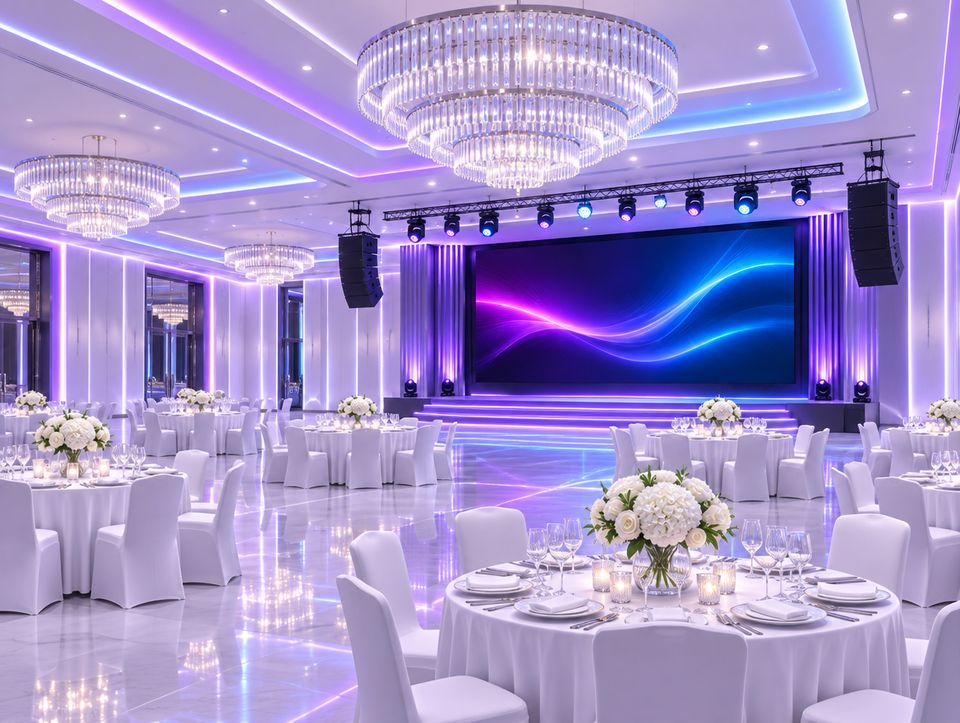
Different jobs in one building
| Area | What it needs |
|---|---|
| Lobby, corridors and restaurants | Background music in separate zones, each with its own source and volume, and paging linked to the fire alarm where regulations require it |
| Ballroom and event halls | A speech and music system, projection or an LED wall, stage lighting, and connection points for visiting bands and production crews |
| Divisible halls | Sound, lighting and control that combine and split together with the movable walls |
| Meeting rooms | A display, video conferencing and simple control |
| Pool, terrace and gardens | Weather-rated speakers on their own zone |
What the system includes
| Part | What it does |
|---|---|
| Audio matrix and DSP | Sends each music source to the right zones, limits the maximum level and changes settings by time of day. |
| Ceiling speakers | Spread background music evenly at low volume. Long runs with many speakers normally use 100 V lines. |
| Ballroom speakers | Main speakers for the stage end, ceiling or delay speakers for the back of the hall, and subwoofers for music events. |
| Wireless microphones | Handheld and lavalier microphones, with their frequencies planned so several can work at once. |
| Projection or LED wall | A laser projector with motorised screens, or an LED wall for halls that stay bright. |
| Lighting | Dimmable house lighting with stored scenes, plus stage and colour wash lighting on DMX. |
| Control | A touch panel in each hall with presets the staff understand, such as Wedding, Conference and Dinner. |
| Connection panels | Stage and control-position inputs, so a visiting DJ or crew plugs in without running cables across the floor. |
How the system is sized
- Background music: for a typical wide-coverage ceiling speaker, space the speakers about twice the distance between the ceiling and the ears of a seated guest. Closer spacing gives a more even level.
- Keep background music low enough for conversation. Guests should notice it only when it stops.
- Size the ballroom for its loudest event, usually a wedding with a band or a DJ, not for speeches alone.
- Treat each section of a divisible hall as a complete room. Combining sections should be one preset, or automatic from the wall position.
- Plan power and cable routes for visiting production: dedicated power for event equipment and a clear path from the stage to the control position.
- Check the acoustics. Hard floors, mirrors and glass make a ballroom echo; carpet, curtains and wall panels bring speech back.
Common mistakes
- One volume control for the whole hotel.
- A ballroom system sized for speeches, which then cannot carry a wedding.
- No connection panel for outside bands and DJs.
- Movable walls with sound and lighting that do not follow them.
- Control so complicated that staff call a technician for every event.
- Speakers hidden behind solid decoration that blocks the sound.
What to prepare before asking for a quotation
- Floor plans with the ceiling height of each area.
- The list of zones and who controls each one.
- The kinds of events you host and the largest audience.
- Whether the halls divide, and how.
- Interior design limits: visible or hidden speakers, colours and finishes.
- Existing systems you want to keep, and the fire alarm interface requirements.
Questions people ask
Can one system serve both background music and events?
The background music system and the ballroom system are usually separate, because they do different jobs. They can still share one equipment rack and one control system, so a page or an emergency message reaches every zone.
How many zones does a hotel need?
One zone for every area where someone will want a different volume or a different source: the lobby, each restaurant, the corridors, the pool, the gym and each hall. Extra zones cost little at design time and a lot to add later.
Projector or LED wall for a ballroom?
A projector with a large screen costs less and suits halls that can dim the lights. An LED wall stays bright under full lighting and suits halls that host daytime conferences and filmed events. The choice follows the kind of events the hall sells.
This guide is also available in Arabic.